
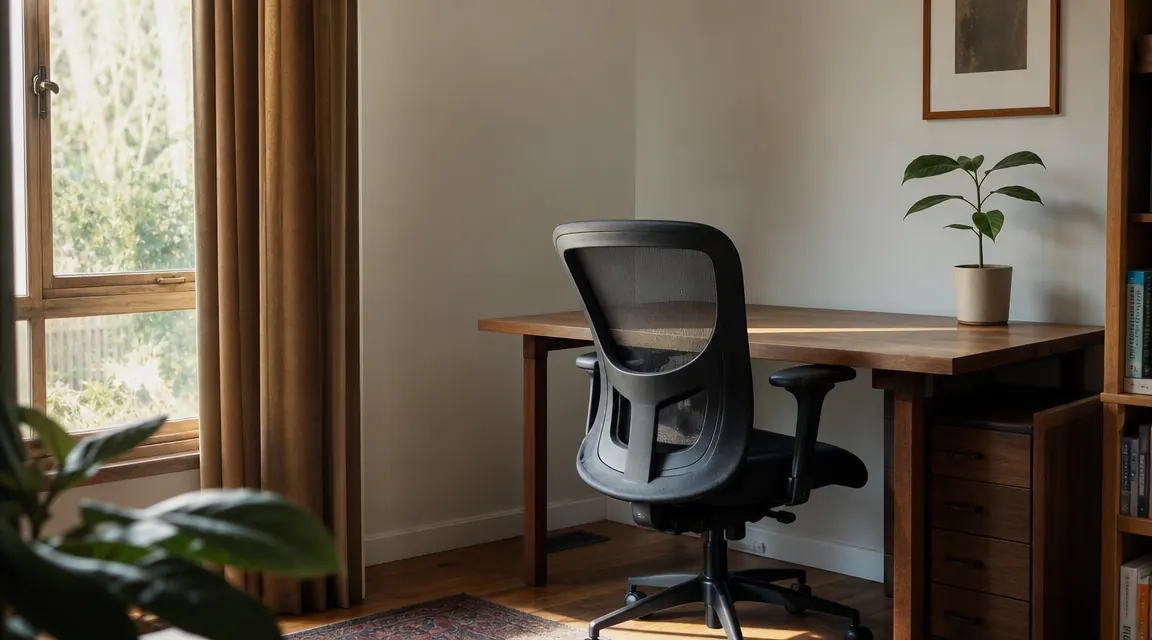
For the first three years of working from home, I sat in a wooden kitchen chair. Not a dining chair with any pretense of cushioning. A plain farmhouse chair I dragged in from the hallway because I thought I would only be at the desk for an hour or two. Those hours stretched into five, then seven, then entire painting-and-email days where I barely moved except to refill my coffee. (The fix was the Staples Hyken, but I will get to that.)
By 4 p.m. most days, my lower back felt like it belonged to someone twice my age. I would get up slowly, stretch with more noise than I care to admit, and promise myself I would figure out the chair situation soon. Soon kept getting postponed, the way it does when the problem is chronic and the solution feels too complicated or too expensive.
I looked at chairs online a dozen times. The ones that looked beautiful were priced like small furniture investments. The mesh ones looked industrial, clinical, the kind of thing you expect to find in a cubicle farm lit by fluorescent lights. I had spent years getting my little office corner to feel calm and personal. I did not want to ruin it with something ugly.
That was the trap I kept falling into. I was optimizing for how the chair looked in photographs instead of whether it would let me actually work for six hours without hobbling to the kitchen afterward.
I was optimizing for how the chair looked in photographs instead of whether it would let me work for six hours without pain.
A friend who does freelance bookkeeping from her spare bedroom mentioned the Staples Hyken. She is practical in the way I try to be but sometimes fail at, and she said simply: it is the chair that fixed my back for less than the cost of one chiropractor visit. She has been sitting in it for over a year.

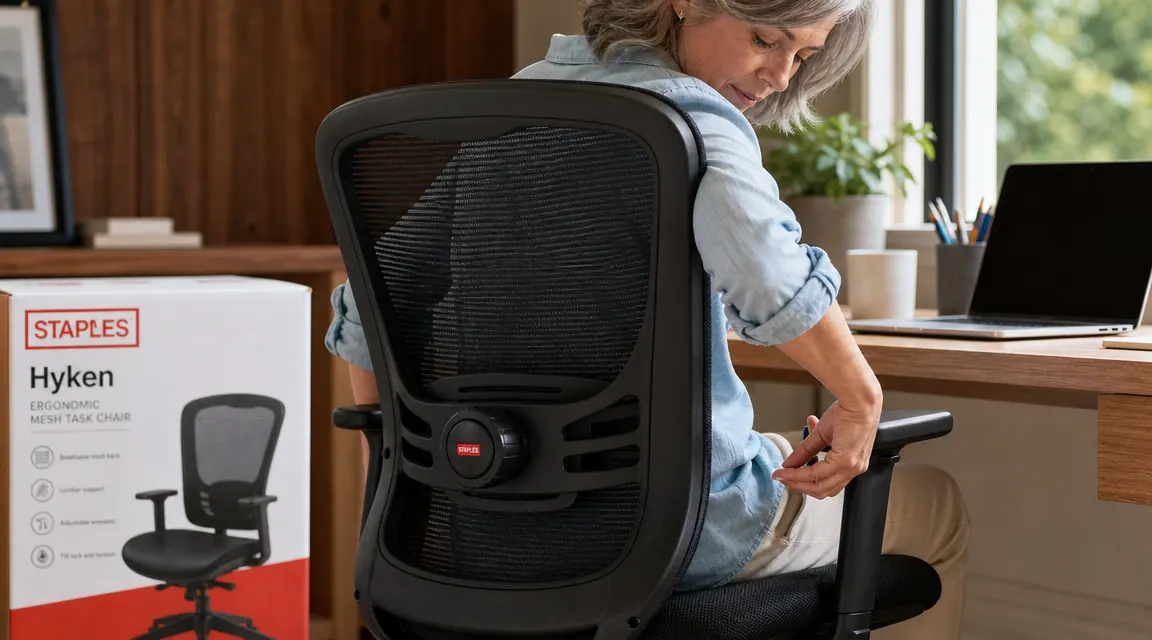
I looked it up. The Staples Hyken is a mesh ergonomic task chair with a built-in lumbar support system, adjustable height, and a synchro-tilt mechanism that lets the seat and back move together as you shift around. It has 3,600-plus reviews on Amazon and a 4.4-star average, which I have learned to trust more than marketing photography. The mesh back means air actually circulates, which matters more than I expected once I started using it.
Your back deserves better than a dining chair. See today's price on the Hyken.
The Staples Hyken has helped thousands of home office workers fix chronic lower back pain. Check whether it is in stock at the current price before you go back to sitting on something that was never designed for six-hour work days.
Amazon Check Today's Price on Amazon →The setup took me about 40 minutes, which is faster than assembling most flat-pack furniture. The instructions are clear and the pieces labeled. Once assembled, the first thing I did was adjust the seat height so my feet were flat on the floor and my elbows landed naturally on my desk. Then I turned the lumbar support knob until the small of my back actually felt held rather than ignored.
That adjustment took maybe two minutes. I have never had to revisit it. The support is firm without being aggressive, which is exactly what I needed. I am 5'4" and the chair fits me well. My friend, who is 5'8", says the same. I have read that very tall people sometimes find the lumbar placement a touch low, so if you are over 6 feet, read a few reviews from people your height before committing.
After two weeks, I noticed something I did not expect. I was not getting up from the desk in pain. The afternoon hobble to the kitchen was just gone. My back still felt like my back. I had gotten so used to that dull ache that its absence felt almost strange.
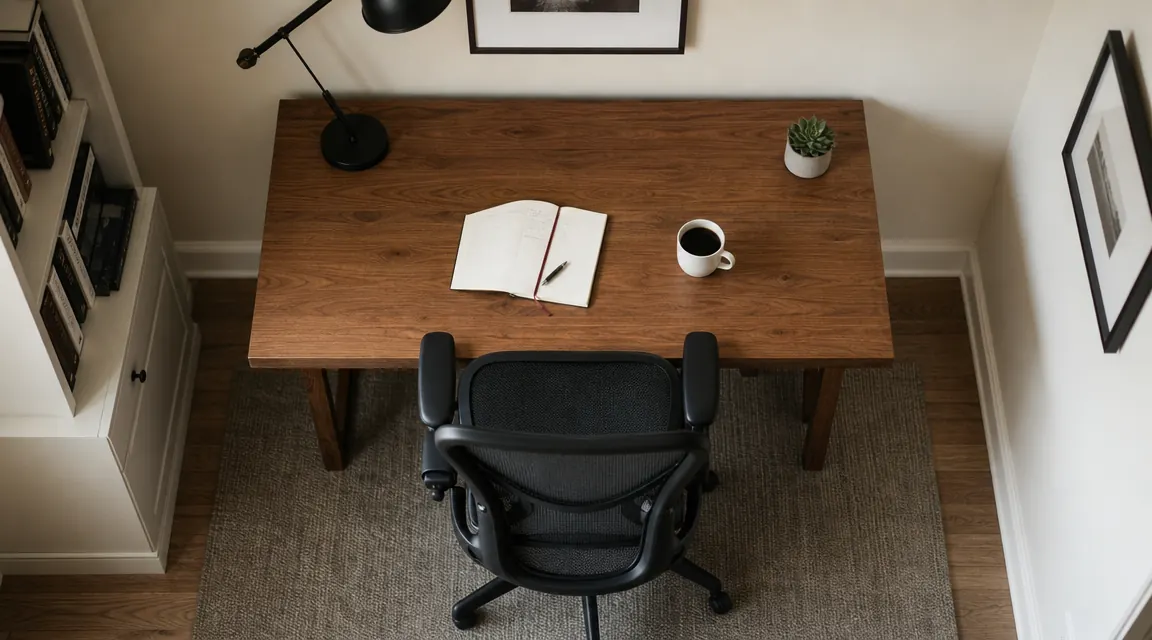
The chair is not perfect. The armrests are fixed and cannot be moved inward or outward, only up and down. For a painter who likes to pull her arms wide sometimes, that is occasionally awkward. The fabric on the seat cushion is fine, not plush. And the chair is black, which is more neutral than beautiful, but it disappears into a corner rather than dominating it, which turns out to be enough for me aesthetically.
What I Would Tell You If We Were Sitting at My Kitchen Table
I would tell you not to wait three years. That is the honest thing I wish someone had said to me. The kitchen chair felt like a reasonable temporary solution, and temporary solutions have a way of becoming permanent ones simply because nobody forces the change.
The Hyken is not glamorous. It does not look like the chairs in aspirational desk-setup photos. But it does what a chair is supposed to do: it supports your body while your mind does its work. If you spend more than four hours a day sitting at a desk, the chair underneath you is not a minor detail. It is infrastructure. Invest in it the way you would invest in a good mattress, and stop apologizing for that choice.
If you want more detail before deciding, I wrote a longer breakdown of everything I noticed after eight months of daily use. And if you are still on the fence about mesh versus foam, there is a piece here that explains exactly why mesh tends to win for back pain at a home desk. Both worth a read before you spend money on a chair you will sit in for the next several years.
Ready to stop starting each afternoon sore? The Hyken is worth checking out.
Three-plus years of back pain ended with one practical swap. See the current price and whether the Hyken ships to your address before another week goes by on the wrong chair.
Amazon Check Today's Price on Amazon →