
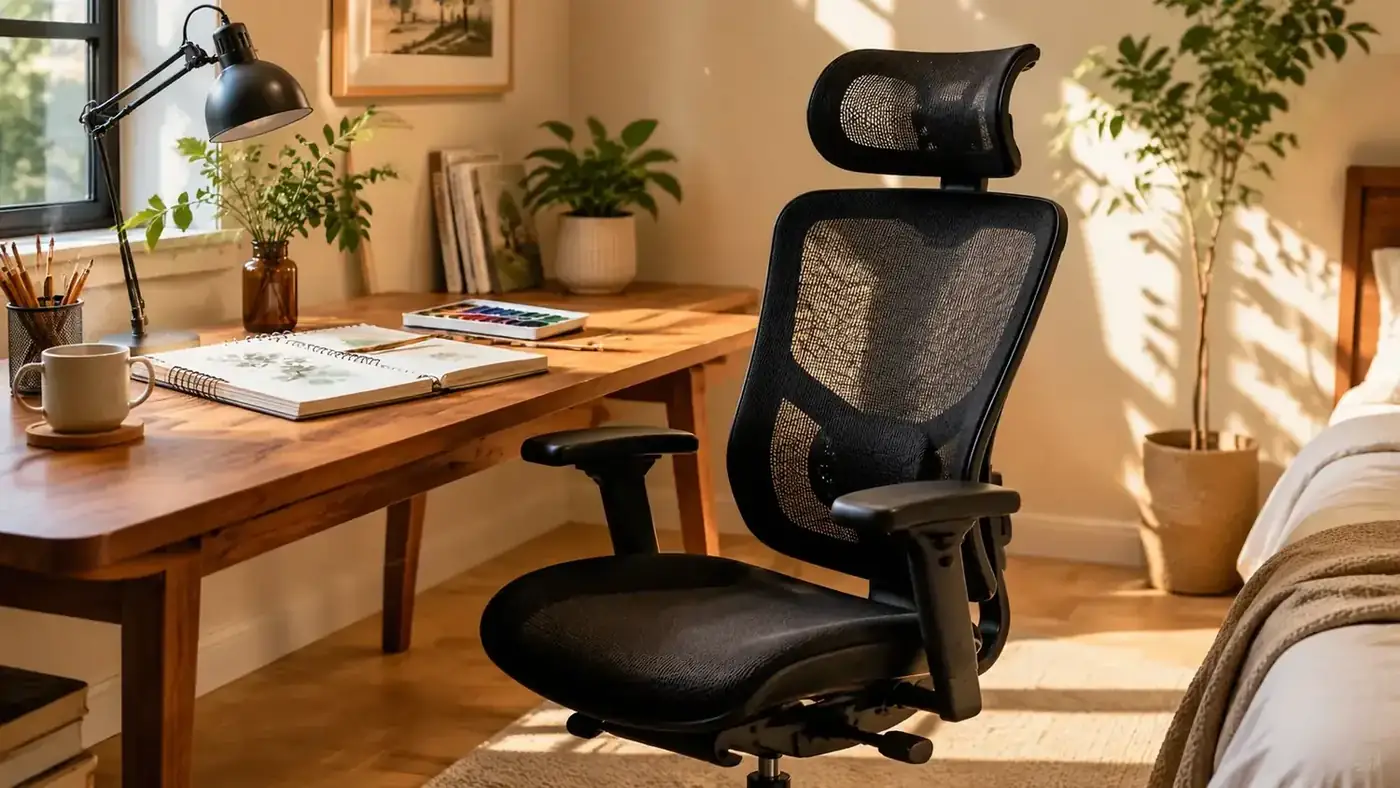
For about three years I worked at my kitchen table. Then I moved a kitchen chair into the bedroom I had converted into a studio-office, thinking that was an upgrade. It was not. By 3 p.m. my lower back had that familiar tight, grinding ache, and by Friday afternoons I was propping myself on a pillow just to get through another hour. I am Barbara. I am retired, I do freelance illustration work from home, and I spend four to six hours a day at a desk. I bought the Staples Hyken mesh ergonomic task chair eight months ago, and this is the honest review I wish I had found before I clicked purchase.
The Hyken has 4.4 stars across more than 3,600 Amazon reviews, and most of those reviews are short. They say things like 'comfortable' or 'good for the price.' None of them tell you what happens around month three, or what the lumbar knob feels like after 200 hours of use, or whether the mesh stays taut or sags like a hammock in August. That is what I want to cover here.
The Quick Verdict
A genuinely supportive mesh chair at a budget price, best for people under 5'8" who sit in one position most of the day. The lumbar system is real and adjustable, but the armrests are mediocre and there is a learning curve on the tilt tension.
Amazon Check Today's Price →Back hurts by 2 p.m.? The Hyken costs less than one chiropractic visit.
The Staples Hyken is one of the only mesh ergonomic chairs in the budget range with a true adjustable lumbar support that you can feel working. Check today's price before it changes.
Amazon Check Today's Price on Amazon →How I Have Been Using It
I set the chair up in my home office, which is a 10 by 11-foot bedroom with a 60-inch wooden desk against the south wall. I am 5'5" and 138 pounds, so I am in the middle of the weight range this chair is designed for. A typical day has me sitting from about 8 a.m. to noon, taking a lunch break and short walk, then returning for two more hours in the early afternoon. On illustration deadlines I push that to seven or eight hours total, which is where a chair either earns its place or shows its flaws.
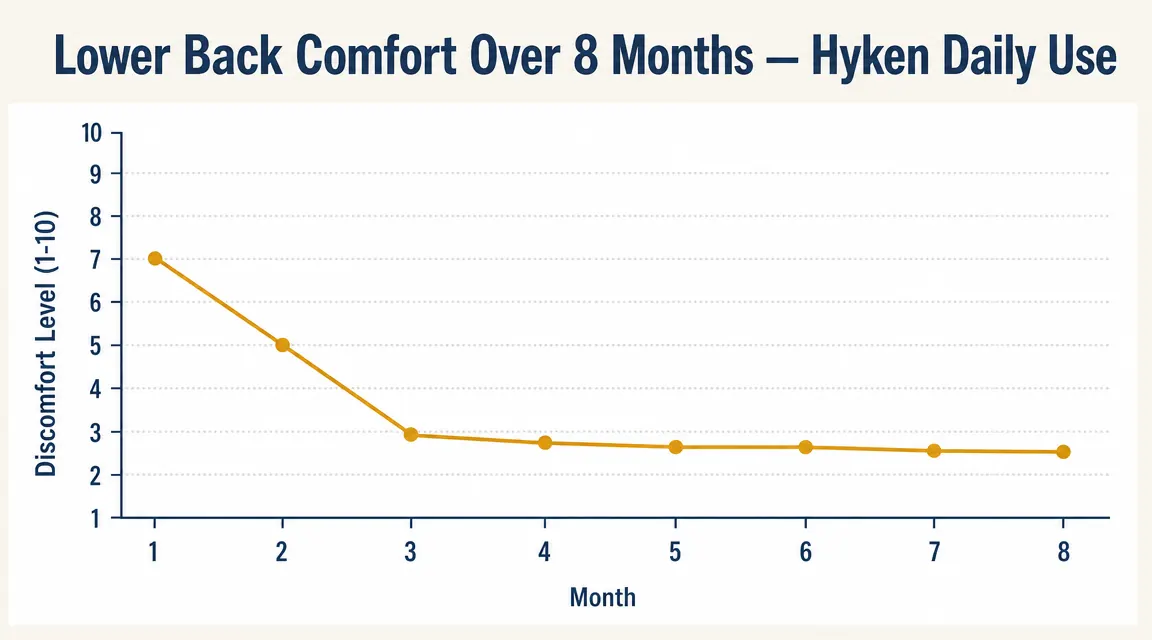
I did not adjust the chair much at first, and that was my mistake. The Hyken rewards some initial setup time. Once I dialed in the seat height so my thighs were parallel to the floor, set the lumbar support two clicks up from factory, and loosened the tilt tension slightly, the chair started to feel like something rather than nothing. Week one felt lukewarm. By week four, I stopped thinking about my lower back before noon, which for me was significant progress.
The Mesh: Breathable, and It Has Held Its Shape
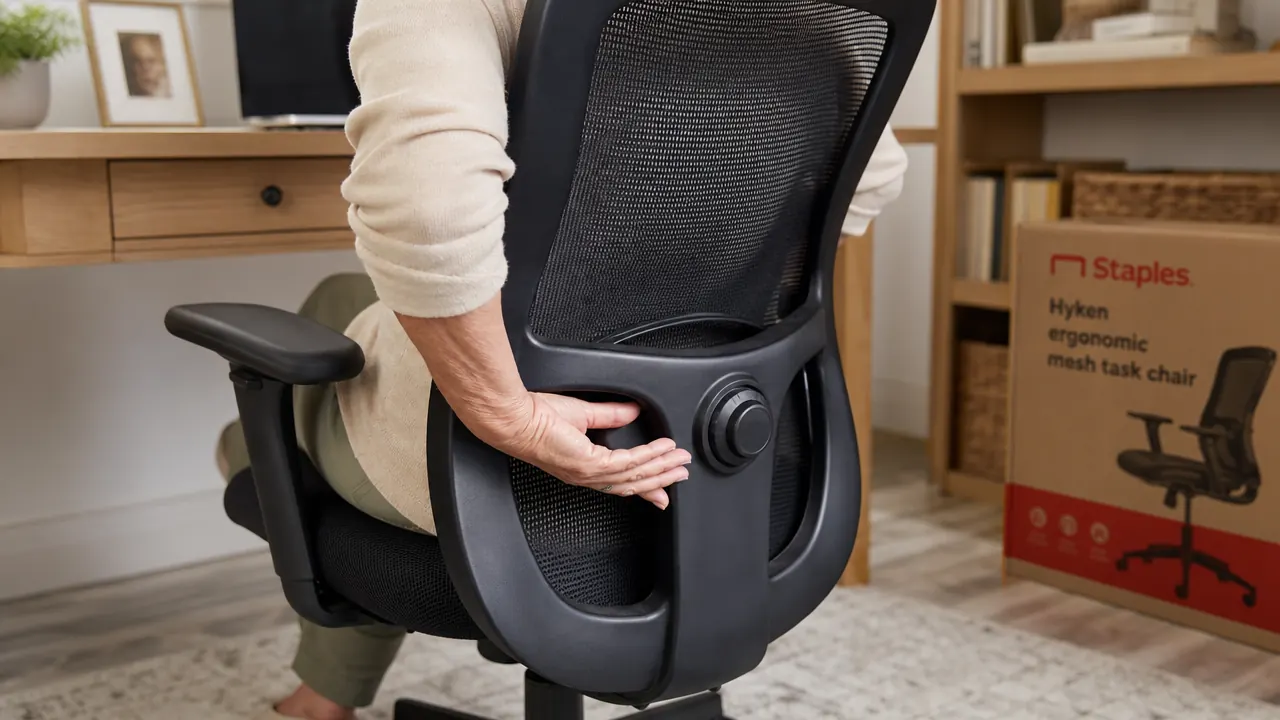
The thing I was most nervous about with a mesh chair at this price was sagging. Cheap mesh sags. You sink through it, the lumbar support stops reaching your back, and you end up in a slow-motion slouch. Eight months in, the Hyken's mesh has held its shape better than I expected. There is a very slight softening in the seat pan but nothing that has changed the support profile. The back panel feels essentially the same as it did in month one.
The breathability is real and worth mentioning in a practical way. I live in Arizona. My office does not have great airflow. In a padded chair I would be peeling myself off the seat by noon every summer. With the Hyken I run about 30 degrees cooler across the lower back, and I have noticed I fidget significantly less, which matters for concentration. If you work somewhere warm or tend to run hot, the mesh is not a nice-to-have feature. It becomes the reason you bought this chair.
One honest note: the seat pan fabric (the cushioned part you actually sit on) is not the same open mesh as the back. It is a tighter woven material over a foam base. It breathes better than pure foam, but it is not the same airflow you get through the back panel. This surprised me and is worth knowing before you expect full-body cooling.
The Lumbar Support: This Is the Real Story
Most chairs in this price range have a fixed lumbar bump. The Hyken has an adjustable height lumbar with a small rotary knob on the right side. You turn it to raise or lower the support pad against your lower back. I was skeptical this would matter, because budget adjustments often feel like theater. But this one is functional. I sit differently than my daughter, who used the chair for a week while visiting, and we needed different lumbar positions. She is 5'9" and needed the support about two clicks higher than where I keep it.
What I will tell you honestly is that the support is noticeable when it is right, but getting it right takes a few days. The range of adjustment is not huge. If you are shorter than 5'3" or taller than 6'1", the lumbar may sit at the wrong height no matter where you set it. My neighbor Connie, who is 5'1", tried the chair and said the support hit more mid-back than lower back for her. Worth knowing if you are outside the middle height range.
By week four I stopped thinking about my lower back before noon. For me, that was not a small thing.
Armrests, Tilt, and the Adjustments That Actually Matter
The armrests are the weakest part of this chair. They move up and down, which is the minimum useful adjustment, but they do not pivot inward or rotate. If you type with your hands angled toward each other (which most people naturally do), the armrests end up slightly to the outside of where your arms want to land. I ended up not using mine most of the time, resting my forearms on the desk edge instead. This is a genuine limitation, not a nitpick. If armrest support is important to you for wrist or shoulder reasons, you will want to look at chairs with 4D armrests, even if it means spending more.
The tilt mechanism has a tension knob underneath the seat. Out of the box the tension is set very firm, close to locked. A lot of reviewers complain the chair does not recline, and the reason is almost always that they never loosened the tension knob. Once I loosened it about three turns, I got a pleasant, gentle recline that does not feel like I am about to tip backward. The tilt lock also works well for when I want to sit fully upright while I am drawing. I use the lock probably two hours a day and free-tilt the other four.
Seat height range is 17 to 21 inches. That covers most people from about 5'2" to 6'2" well. The pneumatic lift cylinder has felt solid through eight months of daily raising and lowering. No sign of slow-sink, which is one of the things cheap gas cylinders develop within a year.
Durability After Eight Months of Hard Daily Use
Nothing has broken. Nothing has loosened noticeably. The casters roll smoothly on my wood floor with a chair mat. The mesh back panel shows no fraying at the edges. The lumbar knob still has the same tactile resistance as when it was new. I have probably put 1,200 to 1,400 hours on this chair at this point, and it feels structurally the same as when I unboxed it.
One small thing I noticed around month five: the plastic armrest caps have very minor surface scuffing from my wrists resting on them, even though I claimed I stopped using the armrests. Apparently I use them more than I thought. The scuffing is cosmetic and has not affected function. It is the kind of thing you only notice if you look for it.
Assembly took me about 35 minutes working alone and was genuinely easy. The instructions are illustrated rather than text-heavy, which I appreciated. All bolts went in cleanly. The chair arrived in good shape with no damage. I have read reviews where people got chairs with cracked bases from shipping, so I suspect that is an occasional quality-control issue rather than the norm, but it is worth inspecting the base before you assemble the rest.
What I Liked
- Adjustable lumbar support that actually moves and makes a difference when set right
- Breathable mesh back keeps your lower back cool, which matters for long work sessions
- Mesh has not sagged after 1,400 hours of use
- Tilt tension and tilt lock both work well once you loosen the factory setting
- Gas cylinder shows no sign of slow-sink after eight months
- Genuinely good value at the price point compared to similarly priced foam chairs
Where It Falls Short
- Armrests only adjust height, not angle or rotation, so they may not work well for your typing posture
- Lumbar range may miss the mark for people under 5'3" or over 6'1"
- Seat pan is cushioned fabric, not open mesh, so you will feel it in hot conditions
- Tilt tension is shipped very firm and feels broken until you discover the knob underneath
- Arm caps show surface wear faster than expected

How It Compares to What I Was Sitting In Before
I mentioned the kitchen chair. I also want to mention the mid-priced office chair I bought at a big-box store about four years ago, a padded swivel chair with no lumbar support and a fabric seat that was absorbing ambient dust and light. By year two it looked dingy and the foam had compressed enough that I was sitting noticeably lower on the right side than the left. The Hyken mesh does not absorb debris the same way, it cannot go uneven because there is no foam in the back panel, and it still looks clean with a simple weekly wipe-down with a barely damp cloth.
If you have been considering the Hyken versus a basic padded task chair at a similar price, the mesh is a long-term bet. Foam compresses. Mesh either holds or fails early. The Hyken has held. I would genuinely rather have a chair that looks a little less plush in photos but performs better eight months in than one that looks inviting and quietly deteriorates. If you want a deeper comparison, I put together a look at how the Hyken stacks up against the Autonomous ErgoChair Pro for those with a larger budget. And if you are still on the fence about mesh versus foam as a material choice, read my piece on 10 reasons mesh beats foam for anyone with back pain first.
Who This Is For
The Hyken is a strong buy for remote workers, freelancers, retirees, and students who sit four to eight hours a day and are spending in the budget range on a chair. It fits best if you are between 5'3" and 6'0", are not extremely particular about armrest ergonomics, and want a breathable seat that will not feel like a wet sponge by 2 p.m. It is also genuinely good for warm climates and rooms without great air conditioning. The lumbar support is the standout feature at this price and it is real, not decorative.
Who Should Skip It
Skip the Hyken if you are shorter than 5'2" and rely on lumbar support specifically, since the adjustment range may not reach your lower back correctly. Skip it if you need rotating or angled armrests for an existing wrist or shoulder condition. If you are over 250 pounds, the Hyken's weight rating is 275 pounds but reviewers at the upper end of that range report the seat pan cushion compresses faster than average. And if you are someone who needs to recline dramatically to relieve spinal pressure, this chair's recline angle is moderate. It is not a chair for full-recline working. For those needs you are looking at a different price range and a different category.
Eight months in, I would still buy this chair again at today's price.
If your lower back is telling you something needs to change and you do not want to spend premium money to find out, the Hyken is the most honest answer I can give you in the budget range. The lumbar support is adjustable and real, the mesh has lasted, and it keeps my Arizona office from being unbearable in summer. Check the current price on Amazon before you decide.
Amazon Check Today's Price on Amazon →